logo

블로그 약 Steel Structure Column Spacing Crucial for Cost Efficiency

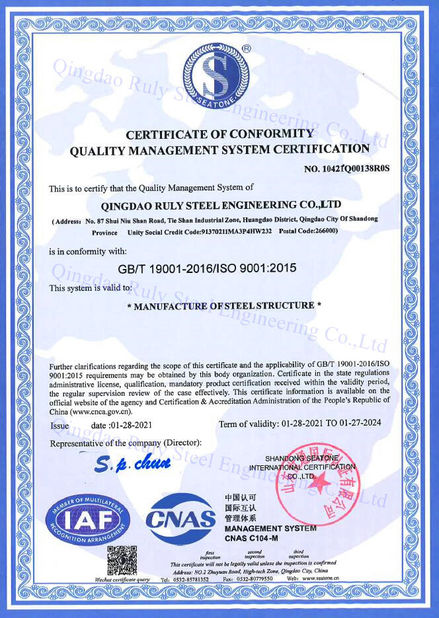
인증
중국 Qingdao Ruly Steel Engineering Co.,Ltd 인증
고객 검토
솔직히 말해서 나는 처음부터 강철 구조물에 이렇게 익숙하지 않습니다, 그러나 그들은 저에게 완벽한 저가 나의 프로젝트, 좋은 일, Ruly 강철을 완료할 것을 돕도록 계획안을 줍니다

—— 마이크 Guioguio

배달 시간은 빠르고, 아주 중요합니다: 제품 항상 보내진 경기 순서. 나는 나가 그(것)들에 결코 실망되지 않았기 것은 때문에 그(것)들을 신뢰합니다.

—— Mae Cena

이 상호적인 협력은 대략 4 년간 지속되고, 그들이 제공하는 서비스가 예상하는의 위 있다는 것을 승인해야 합니다.

—— 테리 Shepley

제가 지금 온라인 채팅 해요
회사 블로그
Steel Structure Column Spacing Crucial for Cost Efficiency
에 대한 최신 회사 뉴스 Steel Structure Column Spacing Crucial for Cost Efficiency

Steel structures have become increasingly prevalent in modern construction due to their high strength-to-weight ratio and rapid assembly. However, controlling costs in steel frame projects remains a critical challenge for the industry. Among various design factors, column spacing significantly influences material usage, construction complexity, and project timelines—ultimately determining the overall project budget.

The Delicate Balance of Column Spacing

Column spacing—the distance between adjacent steel columns—represents a fundamental design parameter in steel construction. While conventional wisdom suggests 6-9 meter spans offer optimal cost efficiency, with 12 meters being the practical maximum for large-span structures, the reality requires more nuanced consideration.

Reduced column spacing increases the total number of vertical supports, directly raising material costs. Conversely, wider spans may decrease column count but necessitate larger beam cross-sections and heavier structural members to maintain load-bearing capacity. Excessive spans also introduce construction challenges that can extend project timelines and increase labor expenses.

Cost Components in Steel Frame Construction

Understanding how column spacing affects budgets requires examining primary cost drivers:

  • Raw material costs: Steel procurement typically represents the largest expense, with market volatility directly impacting budgets. Column spacing decisions fundamentally determine material quantities.
  • Fabrication expenses: Cutting, welding, and assembling structural components requires specialized labor and equipment. Complex joints and precision requirements increase production costs.
  • Transportation logistics: Oversized components may require specialized handling and permits, particularly for long-distance shipments.
  • Installation requirements: Erection complexity affects crane selection, crew size, and safety measures—all influencing labor costs.
  • Protective treatments: Fireproofing and corrosion protection systems represent significant long-term investments.
The Material Optimization Equation

The relationship between column spacing and steel consumption follows a nonlinear pattern. As spans increase, reduced column numbers offset by larger beam dimensions create a complex optimization challenge. Effective solutions involve:

  • Developing mathematical models incorporating structural loads, material properties, and connection details
  • Implementing parametric design tools to evaluate multiple span configurations
  • Conducting comparative analyses of material quantities across design alternatives
Schedule Impacts: The Hidden Cost Multiplier

Extended construction timelines create cascading financial consequences through increased equipment rentals, labor overhead, and financing expenses. Wider column spans may require:

  • Heavier lifting capacity with associated mobilization costs
  • More complex installation sequences
  • Additional safety measures for handling oversized members

Mitigation strategies include prefabrication, automated construction technologies, and enhanced project scheduling.

Safety Considerations: The Non-Negotiable Factor

While cost optimization remains essential, structural integrity cannot be compromised. All designs must comply with relevant building codes and demonstrate adequate performance under design loads. This requires:

  • Comprehensive structural analysis
  • Material testing and quality control protocols
  • Rigorous construction inspection procedures
Practical Application: A Case Study

One industrial facility project originally specified 8-meter column spacing. Detailed analysis revealed that 10-meter spans could reduce column counts while moderately increasing beam sizes. The optimized design achieved 5% material savings with marginally improved construction efficiency, demonstrating the value of thorough span evaluation.

As computational design tools advance, engineers gain enhanced capabilities to model complex interactions between structural parameters and project economics. This technological evolution promises more sophisticated solutions for balancing construction costs with architectural requirements and long-term performance.

선술집 시간 : 2026-02-25 00:00:00 >> 블로그 목록
연락처 세부 사항
Qingdao Ruly Steel Engineering Co.,Ltd

담당자: Mr. steven

전화 번호: 0086-18661691560

회사에 직접 문의 보내기 (0 / 3000)